A will says who gets what. It doesn’t say why, and “why” is what families argue about, wonder about, or treasure for the rest of their lives. This printable is where you explain it in your own words: the story behind the ring, the tools and the recipe box, and the thinking behind the decisions in your will.
The short version
- It is not a will and has no legal effect. Your legal documents control.
- Tell the story of each thing: where it came from, what it meant, who you hope has it.
- Explain your decisions kindly, especially if people are treated differently.
- Keep it with your will and tell your executor where it is.
- Ask your attorney whether your state lets a signed list of belongings be legally binding.
Get it: $5.99
A 15-page keepsake and heirloom record, ready to print on standard letter paper. You can also type into it on a computer or tablet and save it.
Buy the PDF →Instant download. See a sample page. Or get all four printables in the Write Your Legacy Set, $11.99.
Know someone who needs this?
Pass it along. It might be exactly what a family you know would love to have.
What’s in it
- Two ways to use it: writing your own, or sitting with a parent before a move or downsizing and writing down the answers in their words
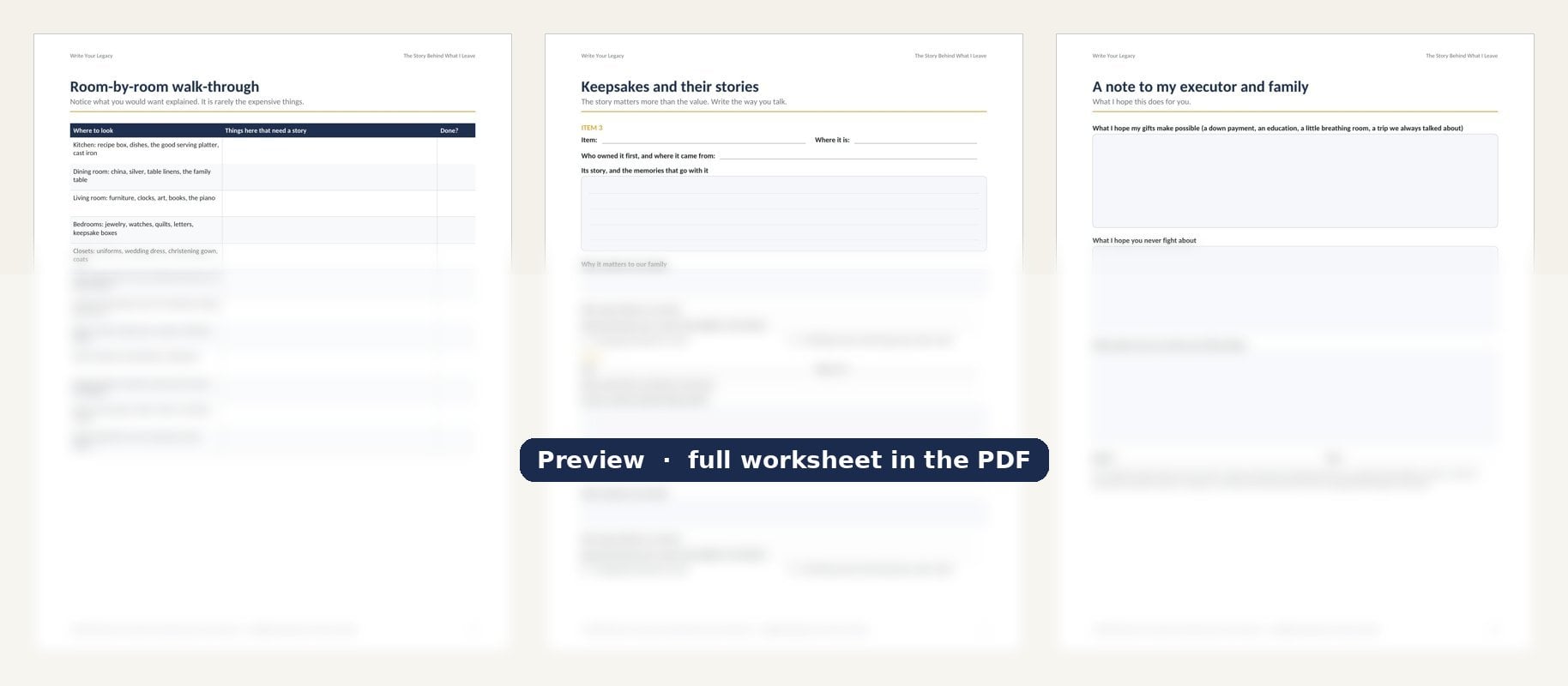
- A room-by-room walk-through to spot the things that need a story. It’s rarely the expensive things.
- A keepsake index with room for 24 items
- Twelve full keepsake entries: who owned it first, its story and the memories that go with it, why it matters, who you hope will have it, special instructions, and identifying marks
- The house, the land or the family business: what it has meant and what you hope happens to it
- Recipes, photographs and digital keepsakes
- Family stories that might otherwise be lost
- Things nobody needs to keep, and where you’d like them donated
- “Why I decided what I decided” and “What I hope this does for you”
- A clear notice that this is not a legal document
How to use it
- Walk through the house and notice what you’d want explained. It’s rarely the expensive things.
- Write one item at a time. A few sentences each.
- Explain any decision that could surprise someone. A few plain sentences now can prevent years of hurt.
- Show it to your attorney so it doesn’t conflict with your will or trust.
- Store it with your will, and tell your executor it exists.
What this is, and what it isn’t
This printable is sometimes called an ethical will or a legacy letter: a personal document that passes on meaning rather than property. It does not change who inherits anything. If it ever conflicts with your will, trust or beneficiary forms, those documents control.
Many states allow a separate signed list of personal belongings to be legally binding when a will refers to it. The rules differ by state, so ask an attorney licensed in your state whether that applies to you and how to do it properly. To gather accounts, contacts and documents in one place, see getting your affairs in order and the important documents checklist.
More ways to write your legacy
- What I Want You to Know: values and guidance, one page at a time.
- Letter to My Grandchildren: one short letter for each stage of their lives.
- The Legacy Interview: questions to ask a parent, with follow-ups, a photo session and a recording log.
- What My Family Needs to Know: the planner for accounts, contacts, documents and final wishes.
- Write Your Legacy: all four printables in one place.
Questions families ask
What is an ethical will or legacy letter?
An ethical will, also called a legacy letter, is a personal document that passes on values, stories and explanations rather than property. It has no legal effect. People use it to explain the meaning of belongings, the reasons behind decisions in their will, and what they hope for the people they love.
Is a letter explaining my will legally binding?
No. A letter of explanation is not a legal document and does not change your will, trust or beneficiary forms. Many states do allow a separate signed list of personal belongings to be binding if the will refers to it, but the rules vary, so ask an attorney licensed in your state.
Should I explain why I divided my estate the way I did?
Many families find it helps. When children are treated differently, when one is named executor, or when money goes to a cause, a few plain and kind sentences of explanation can prevent hurt and conflict. Have your attorney review it so it does not conflict with your legal documents.
Changelog
- 16 November 2026 — Published, with the printable.
This page is educational and is not legal advice. Mark Duda is not an attorney. The printable has no legal effect. For wills, trusts and lists of personal property, talk with an attorney licensed in your state. See our disclaimers.