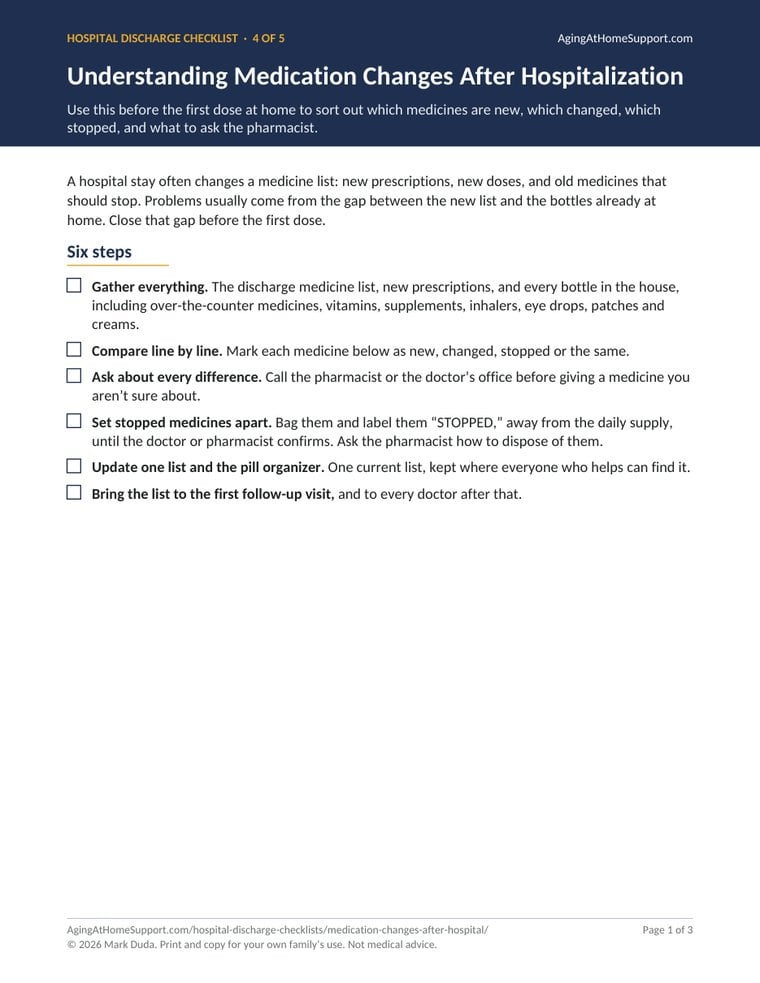
A hospital stay often changes a medicine list: new prescriptions, new doses, and medicines that should stop. Problems usually come from the gap between the new list and the bottles already at home. This checklist walks you through six steps to close that gap before the first dose, with a comparison chart and the questions to ask the pharmacist.
The short version
- Gather everything, including over-the-counter medicines, vitamins, inhalers, eye drops, patches and creams.
- Mark each one new, changed, stopped or the same.
- Bag and label stopped medicines away from the daily supply until the doctor or pharmacist confirms.
- Ask before you give anything you aren’t sure about. Never start, stop or change a dose on your own.
Download the checklist
3 pages, ready to print on standard letter paper. Print it and write by hand, or type into it on a computer and save it.
Download the PDF →No cost. No email required.
Know someone who needs this?
Pass it along. It might be exactly what a family you know needs this week.
What’s on it
- Six steps from gathering every bottle to bringing one updated list to the follow-up visit
- Medicine comparison chart: each medicine, its status, what changed, why, and who confirmed it
- Six questions for the pharmacist, including brand and generic duplicates and how to dispose of stopped medicines
- Stop and ask: the situations that mean call before the next dose
How to use it
- Do it on the first afternoon home, before the evening doses.
- Use the discharge medicine list as the starting point, then add every bottle in the house.
- Call the pharmacy with the chart in front of you. Pharmacists are used to this call.
- Copy the final list onto one medication schedule and set up the pill organizer from it.
Where the mix-ups happen
The most common problems are simple: a medicine that was stopped in the hospital gets taken from the old bottle at home; the same medicine appears twice under a brand name and a generic name; a dose was changed but the old bottle still has the old instructions; or an over-the-counter medicine or supplement interacts with something new. A side-by-side comparison catches most of them.
Our guide to managing medications covers the longer-term routine: one list, one pharmacy and a yearly review. The Medication Schedule printable is the daily chart to use once the list is settled.
Want the whole discharge in one place?
These checklists are each one piece. Coming Home from the Hospital is a 21-page fill-in workbook that puts them together: the questions for the discharge planner, every medication change, the warning signs, the equipment and a two-week plan the family can share. $14.99.
Questions families ask
What should I do with medicines that were stopped in the hospital?
Don’t throw them away and don’t keep them with the daily supply. Put them in a bag labeled “stopped,” confirm with the doctor or pharmacist, and ask the pharmacist how to dispose of them.
Why does the hospital medicine list look different from my parent’s bottles?
Hospitals often change doses, start new medicines, stop old ones, and substitute a generic for a brand name. Compare the discharge list with every bottle at home and ask the pharmacist or doctor about each difference before the next dose.
Who should I call with a question about a new medicine?
The pharmacist who filled it can answer most questions about how to take it, side effects and interactions. Questions about whether your parent should take it at all go to the doctor who prescribed it.
The rest of this set
- Preparing for a Parent’s Hospital Discharge: the days before discharge: who does what, equipment, prescriptions and the papers to have in hand
- Questions to Ask Before Leaving the Hospital: 14 questions for the doctor, nurse and pharmacist on discharge day, with room for the answers
- The First 72 Hours at Home: a plan and three-day log for the first days home, with warning signs and who to call
- Getting the Home Ready for Home Health Services: what to set up before the first home health visit, what to have ready, and what to ask the agency
All five are on the hospital discharge checklists page.
Related reading on this site
- Managing medications at home
- Medication Schedule: a printable daily and weekly chart
- Fall prevention at home
- Emergency Information Sheet: a printable for the refrigerator door
Changelog
- 24 November 2026 — Published with the printable checklist.
Sources
- Medicare, “Your Discharge Planning Checklist” (CMS Product 11376) — Medicare’s own checklist for patients and caregivers preparing to leave a hospital
- 42 CFR 482.43, hospital discharge planning — early planning, the patient’s and caregiver’s role, provider lists and freedom of choice
Last verified: 24 November 2026 against Medicare’s discharge planning checklist and 42 CFR 482.43 · Next review: May 2027, or when the rules change
This page and checklist are educational and are not medical or legal advice. Follow the instructions of the hospital and your parent’s doctors, and ask them about anything that is unclear. Mark Duda is not a physician, nurse or attorney. Medicare Advantage plans have their own rules; check with the plan.
The checklists may be printed and copied for personal use within your own family.