You’ve realized Mom or Dad is struggling at home, and you don’t know where to begin. Start here. This checklist covers the first two weeks: what to make safe right away, the first calls to make, how the family can cover the days while you decide, and the order to work through the bigger decision.
The short version
- First, check for danger. A fall with injury, chest pain, trouble breathing or sudden confusion means call 911.
- This week, fix the risks that could cause real harm: falls, the stove, medicines, getting help in an emergency.
- Make four calls: their doctor, the rest of the family, the local Area Agency on Aging, and their pharmacist.
- Then decide together, starting with what your parent wants.
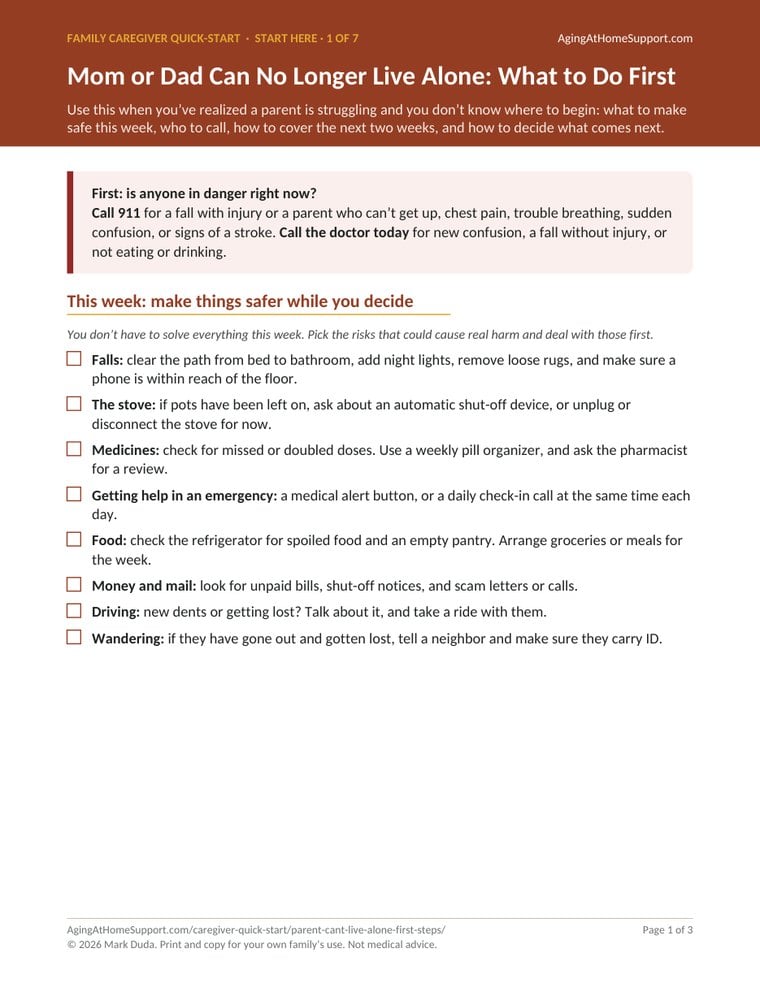
Download the checklist
3 pages, ready to print on standard letter paper. Print it and write by hand, or type into it on a computer and save it.
Download the PDF →No cost. No email required.
Know someone who needs this?
Pass it along. It might be exactly what a family you know needs this week.
The checklist
This week: make things safer while you decide
- Falls: clear the path from bed to bathroom, add night lights, remove loose rugs, and keep a phone within reach of the floor.
- The stove: if pots have been left on, ask about an automatic shut-off device, or disconnect the stove for now.
- Medicines: check for missed or doubled doses; use a weekly pill organizer and ask the pharmacist for a review.
- Getting help in an emergency: a medical alert button, or a daily check-in call at the same time each day.
- Food: check for spoiled food and an empty pantry; arrange groceries or meals.
- Money and mail: look for unpaid bills, shut-off notices and scam letters or calls.
- Driving: new dents or getting lost? Talk about it, and take a ride with them.
- Wandering: if they have gone out and gotten lost, tell a neighbor and make sure they carry ID.
The first calls to make
- Their doctor: report what you’ve seen and ask for a visit that looks at thinking, falls and medicines.
- The rest of the family: share what you’ve seen before anyone decides anything.
- The Area Agency on Aging: local meals, rides, help at home and caregiver support. Find yours at eldercare.acl.gov or 1-800-677-1116.
- Their pharmacist: a review of every medicine, including over-the-counter ones.
- A neighbor or friend nearby: someone who can check in and call you.
Cover the next two weeks
Fill in who covers each day, with a visit, a call or a meal. The PDF has a two-week grid.
Then decide what comes next
- Ask your parent what matters most and what help they would accept.
- Write down what they need help with, area by area, and how often.
- Look at every option, from more help at home to moving in with family to assisted living.
- Put a cost next to each option, and who would pay.
- Meet as a family to agree on a plan and who does what.
“Can’t live alone” or “can’t live alone like this”?
Most parents who are struggling don’t need to move tomorrow. Many can stay home safely with the right help, at least for a while. The real question is what it would take for your parent to live safely, and whether that is possible and affordable. The first two weeks are for making things safer and getting the facts, so the family can answer that question together instead of in a crisis.
Our long guide, When a parent can no longer live alone, walks through every option and what each one costs.
Want the plan written down in one place?
The Family Care Plan is a fill-in workbook for families running a parent’s care: what she needs, who does what, what it costs, and what happens when something goes wrong. $14.99.
Questions families ask
What should I do first when a parent can’t live alone?
Check for immediate danger first. Then make the home safer this week (falls, the stove, medicines, emergency help), call their doctor, the rest of the family and the local Area Agency on Aging, and arrange coverage for the next two weeks while the family decides on a longer-term plan with your parent.
Who can help a family figure out what to do?
The local Area Agency on Aging can tell you about services nearby, such as meals, rides and help at home. Find it through the Eldercare Locator at eldercare.acl.gov or 1-800-677-1116. Your parent’s doctor can assess health, memory and falls, and a geriatric care manager can help plan for a fee.
Does my parent have to move?
Not necessarily. Many parents can stay home safely with more help, changes to the house, or family support. Start with what your parent wants and what help they need, then compare options and costs.
Your next step
Use Signs a Parent Needs More Help to write down what you’ve seen, then the care needs checklist to see what help is needed.
Go deeper
- When a parent can no longer live alone: what to do, what it costs
- The Decision Ladder: eight options, from smallest to biggest
- Home Safety Walk-Through
- Care Options and Cost Worksheet
- When a parent refuses help
The Family Caregiver Quick-Start
- Mom or Dad Can No Longer Live Alone: What to Do First (this page)
- Signs a Parent Needs More Help
- Preparing for a Family Care Meeting
- Choosing a Home Care Agency
- Preparing for a Home Care Assessment
- What to Bring to a Medical Appointment
- Organizing a Parent’s Important Information
See all seven, organized by where your family is, on the Family Caregiver Quick-Start page.
Changelog
- 24 November 2026 — Published with the printable checklist.
Sources
- Eldercare Locator (U.S. Administration for Community Living) — finding the local Area Agency on Aging; 1-800-677-1116
Last verified: 24 November 2026 · Next review: May 2027
This page and checklist are educational and are not medical, legal or financial advice. Health questions belong with your parent’s doctor. Mark Duda is not a physician, nurse or attorney.
The checklists may be printed and copied for personal use within your own family.