You noticed something, and you can’t stop noticing it. This checklist lists the signs families most often see, area by area, with what to do about each one: call now, fix this week, or watch and write it down. One sign is a bad day; several in the same area are a pattern.
The short version
- Call now for a fall with injury, chest pain, trouble breathing, sudden confusion or signs of a stroke.
- Fix this week: safety risks, medicine mix-ups and money problems.
- Watch and write it down: changes in eating, personal care, the house and mood.
- Rule out the treatable with the doctor: medicines, infections, hearing, vision and depression.
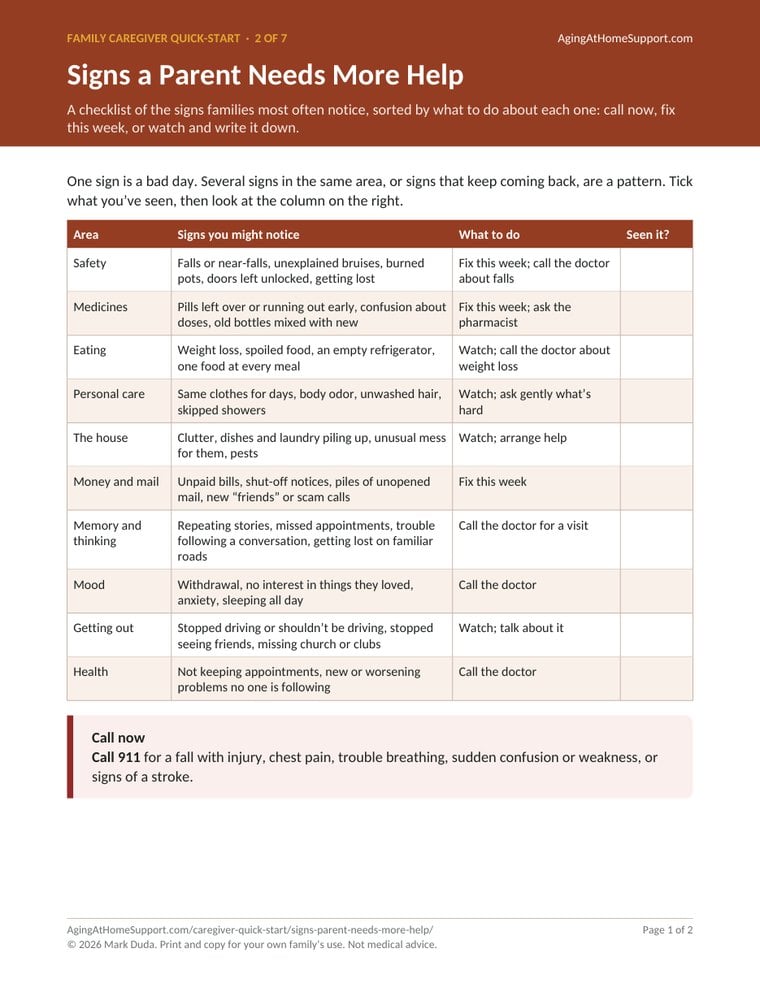
Download the checklist
2 pages, ready to print on standard letter paper. Print it and write by hand, or type into it on a computer and save it.
Download the PDF →No cost. No email required.
Know someone who needs this?
Pass it along. It might be exactly what a family you know needs this week.
The signs, and what to do
| Area | Signs you might notice | What to do |
|---|---|---|
| Safety | Falls or near-falls, unexplained bruises, burned pots, doors left unlocked, getting lost | Fix this week; call the doctor about falls |
| Medicines | Pills left over or running out early, confusion about doses, old bottles mixed with new | Fix this week; ask the pharmacist |
| Eating | Weight loss, spoiled food, an empty refrigerator | Watch; call the doctor about weight loss |
| Personal care | Same clothes for days, body odor, skipped showers | Watch; ask gently what’s hard |
| The house | Clutter, dishes and laundry piling up, unusual mess | Watch; arrange help |
| Money and mail | Unpaid bills, shut-off notices, unopened mail, new “friends” or scam calls | Fix this week |
| Memory and thinking | Repeating stories, missed appointments, getting lost on familiar roads | Call the doctor for a visit |
| Mood | Withdrawal, no interest in things they loved, anxiety, sleeping all day | Call the doctor |
| Getting out | Stopped driving or shouldn’t be driving, stopped seeing friends | Watch; talk about it |
| Health | Missed appointments, problems no one is following | Call the doctor |
Before you decide anything
- Spend a longer visit, a whole day if you can.
- Ask your parent what they’ve noticed and what feels hard.
- Ask the doctor to rule out the treatable.
- Share what you’ve written down with the family.
One sign is a Tuesday. A cluster is a signal.
Everyone forgets a name or leaves a dish in the sink. What matters is a pattern: several signs in the same area, signs that keep coming back, or a sudden change from how your parent usually is. A sudden change in thinking or alertness over hours or days is different; it can be a medical problem such as an infection or a medicine reaction, so call the doctor that day.
Writing down what you see, with dates, gives the doctor something to act on and gives the family the same facts. The What I’m Noticing log is built for that.
Keeping track for the whole family?
The Family Care Binder brings the caregiving forms together in one fillable file you can share: contacts, medicines, appointments, visit notes and more. $19.99.
Questions families ask
What are the signs an elderly parent needs more help?
Common signs include falls or bruises, missed or doubled medicines, weight loss or spoiled food, skipped bathing, a messier house than usual, unpaid bills or scam calls, memory problems, withdrawal or low mood, and trouble driving. Several signs in one area, or signs that keep returning, are a pattern worth acting on.
When should I call the doctor about a parent’s decline?
Call the same day for sudden confusion or a sudden change in alertness, a fall, or not eating or drinking. Call 911 for a fall with injury, chest pain, trouble breathing or signs of a stroke. For slower changes in memory, mood or weight, ask for a visit and bring dated notes.
Could the signs be something treatable?
Yes. New medicines, infections, dehydration, hearing or vision loss and depression can all look like decline. Ask the doctor to look for treatable causes.
Your next step
If the signs add up, go to What to Do First, or use the care needs checklist to see exactly what help is needed.
Go deeper
- Signs your parent needs help: fix this week, watch, or call now
- What I’m Noticing: a dated log
- Seeing the Whole Day: a plan for one longer visit
- When a parent seems fine at the doctor
The Family Caregiver Quick-Start
- Mom or Dad Can No Longer Live Alone: What to Do First
- Signs a Parent Needs More Help (this page)
- Preparing for a Family Care Meeting
- Choosing a Home Care Agency
- Preparing for a Home Care Assessment
- What to Bring to a Medical Appointment
- Organizing a Parent’s Important Information
See all seven, organized by where your family is, on the Family Caregiver Quick-Start page.
Changelog
- 24 November 2026 — Published with the printable checklist.
Last verified: 24 November 2026 · Next review: May 2027
This page and checklist are educational and are not medical, legal or financial advice. Health questions belong with your parent’s doctor. Mark Duda is not a physician, nurse or attorney.
The checklists may be printed and copied for personal use within your own family.