A parent’s doctor visit goes by fast. This checklist covers what to bring, what to do before the visit, your top three questions, and a page to write down what the doctor said before you leave the room, so nothing is lost on the drive home.
En español: Qué llevar a una cita médica (lista para imprimir).
The short version
- Bring every medicine bottle, or an up-to-date list, plus insurance cards, glasses and hearing aids.
- Agree on your role with your parent before you go in.
- Pick your top three questions. Visits often run short.
- Write down what the doctor said before you leave the room.
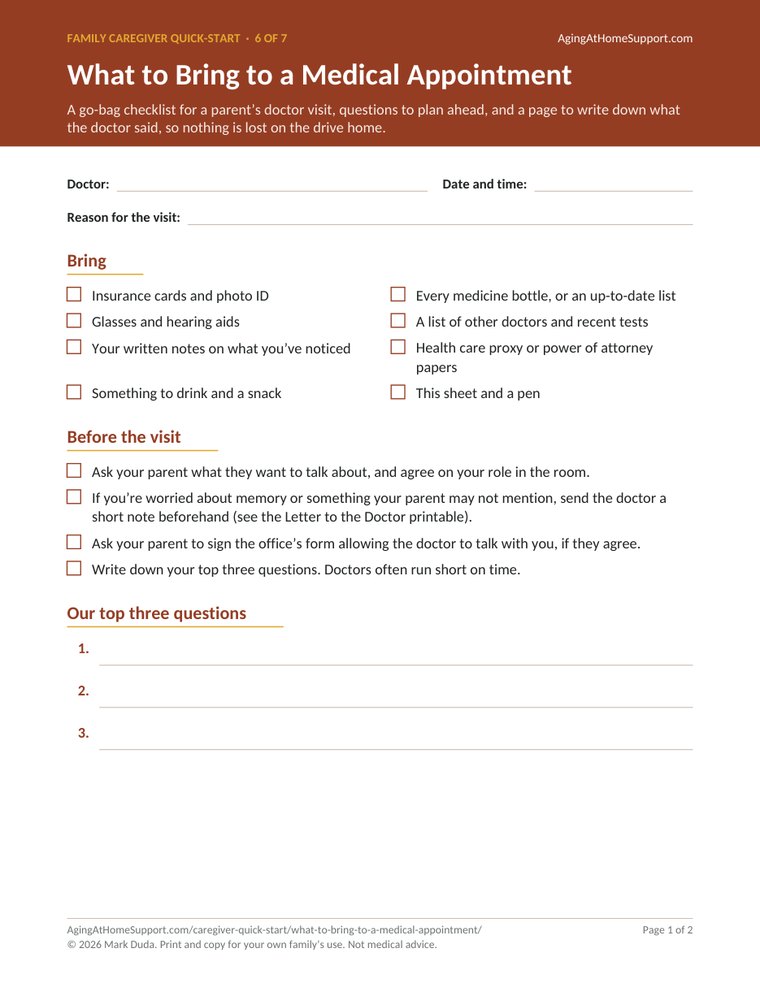
Download the checklist
2 pages, ready to print on standard letter paper. Print it and write by hand, or type into it on a computer and save it.
Download the PDF →No cost. No email required.
Know someone who needs this?
Pass it along. It might be exactly what a family you know needs this week.
The checklist
Bring
- Insurance cards and photo ID
- Every medicine bottle, or an up-to-date list
- Glasses and hearing aids
- A list of other doctors and recent tests
- Your written notes on what you’ve noticed
- Health care proxy or power of attorney papers
- Something to drink and a snack
Before the visit
- Ask your parent what they want to talk about, and agree on your role in the room.
- If you’re worried about something your parent may not mention, send the doctor a short note beforehand.
- Ask your parent to sign the office’s form allowing the doctor to talk with you, if they agree.
- Write down your top three questions.
Before you leave the room
- The main findings, in words you can repeat
- Medicines started, changed or stopped, with dose and timing
- Tests ordered and referrals
- The next appointment
- Warning signs to call about, and who to call
Your role in the room
Your parent is the patient, and most doctors will speak to them first. Agree beforehand on what you’ll do: take notes, fill in history, or raise a concern they might skip. If you’re worried about memory or something your parent won’t bring up, a short letter to the doctor before the visit is often better than correcting them in the exam room. The Letter to the Doctor printable is built for that.
Doctors generally can share information with a family member involved in care unless the patient objects, but many offices ask the patient to sign a form naming who they can talk to. Ask your parent whether they’re comfortable signing one.
Worried about something your parent won’t mention?
The Letter to the Doctor and Appointment Prep Sheet gets your dated observations to the doctor before the visit. A fillable copy you can type into or print is $2.99.
Questions families ask
What should I bring to my parent’s doctor appointment?
Insurance cards and ID, every medicine bottle or an up-to-date list, glasses and hearing aids, a list of other doctors and recent tests, written notes on what you’ve noticed, any health care proxy or power of attorney papers, and your top three questions.
Can the doctor talk to me about my parent?
Doctors can generally share information with a family member who is involved in the patient’s care unless the patient objects. Many offices ask the patient to sign a form naming who they can speak with; ask your parent if they’re willing.
How do I remember what the doctor said?
Write it down before you leave the room: the main findings, any medicine changes, tests and referrals, the next appointment and the warning signs to call about. Ask the doctor to repeat anything you didn’t catch.
Your next step
Keep the visit notes with everything else: Organizing a Parent’s Important Information. Coming home from a hospital stay? See the hospital discharge checklists.
Go deeper
- Letter to the Doctor and Appointment Prep Sheet
- How to prepare for a memory appointment
- When a parent seems fine at the doctor
- Medication Schedule
- Managing medications
The Family Caregiver Quick-Start
- Mom or Dad Can No Longer Live Alone: What to Do First
- Signs a Parent Needs More Help
- Preparing for a Family Care Meeting
- Choosing a Home Care Agency
- Preparing for a Home Care Assessment
- What to Bring to a Medical Appointment (this page)
- Organizing a Parent’s Important Information
See all seven, organized by where your family is, on the Family Caregiver Quick-Start page.
Changelog
- 24 November 2026 — Published with the printable checklist.
Last verified: 24 November 2026 · Next review: May 2027
This page and checklist are educational and are not medical, legal or financial advice. Health questions belong with your parent’s doctor. Mark Duda is not a physician, nurse or attorney.
The checklists may be printed and copied for personal use within your own family.