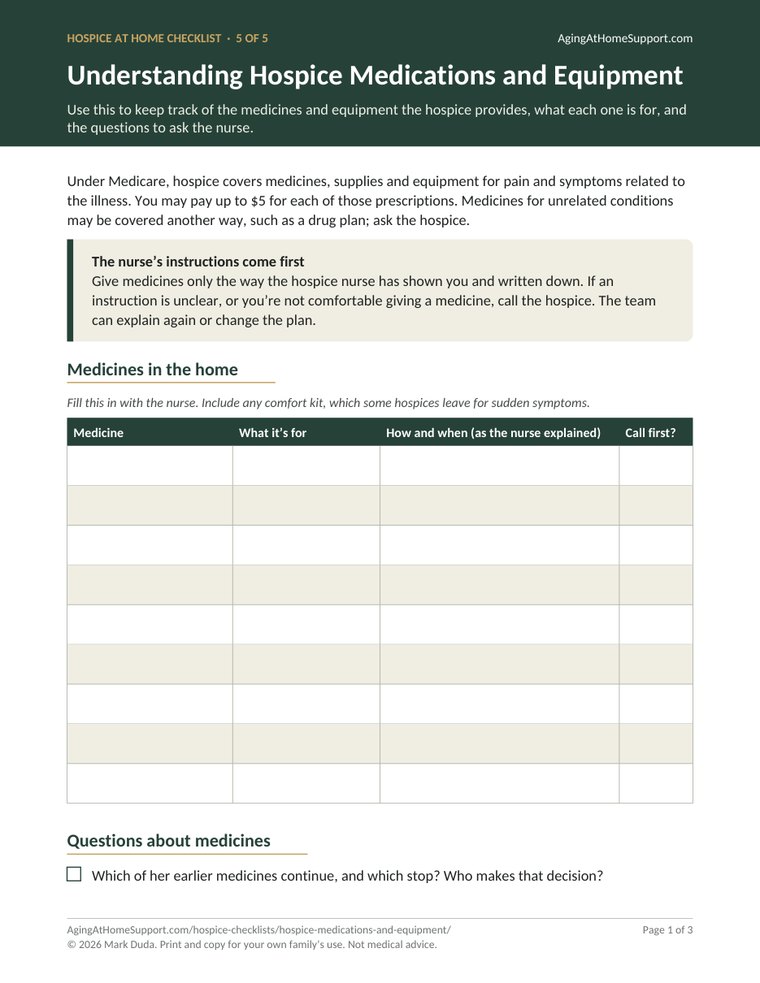
Hospice brings medicines and equipment into the home, sometimes including a small “comfort kit” for sudden symptoms. This checklist helps your family keep track of what each one is for, the nurse’s instructions, who supplies what, and every dose given, so the nurse can adjust the plan and everyone who helps stays on the same page.
The short version
- The nurse’s instructions come first. Give medicines only the way the hospice nurse has shown you and written down.
- Not comfortable giving a medicine? Say so. The team can explain again or change the plan.
- Under Medicare, hospice covers medicines and equipment for the illness; you may pay up to $5 per prescription.
- Ask how to dispose of unused medicines. The hospice must explain its policy.
Download the checklist
3 pages, ready to print on standard letter paper. Print it and write by hand, or type into it on a computer and save it.
Download the PDF →No cost. No email required.
Know someone who needs this?
Pass it along. It might be exactly what a family you know needs this week.
What’s on it
- Medicines in the home: what each is for, how and when as the nurse explained, and whether to call first
- Questions about medicines: six, including storage, refills and disposal
- Equipment: supplier, phone, delivery and notes for each item
- Equipment safety, including oxygen
- Dose log: date and time, medicine and amount, why it was given, and how it helped
How to use it
- Fill in the medicine table with the nurse, not from memory.
- Keep the dose log by the medicines and have everyone who gives a dose write it down.
- Show the log to the nurse at each visit.
What families are, and aren’t, expected to do
Between visits, families often give medicines by mouth or other simple ways, following the nurse’s written instructions. That doesn’t mean the family is managing the medical care: the hospice team decides what is given and when, and changes the plan as needs change. If an instruction is unclear, if you aren’t comfortable giving something, or if a medicine doesn’t seem to help, call the hospice, any time of day or night.
Medicare requires hospices to have written policies for the safe use and disposal of controlled medicines in the home and to discuss them with the family. Ask the nurse to walk you through yours.
Want every name, number and medicine in one place?
When Hospice Comes Home is an 18-page fill-in workbook for families caring for someone on hospice at home: the hospice team, who to call and what to say, comfort medications, a daily record for the nurse, and your rights. $14.99.
Questions families ask
What is a hospice comfort kit?
Some hospices leave a small supply of medicines in the home for sudden symptoms such as pain, breathlessness, anxiety or nausea, so relief doesn’t have to wait for a pharmacy. The hospice nurse explains which medicines are in it and when to call before using them. Only use it as the nurse instructs.
Does Medicare pay for hospice medications?
Under Medicare, hospice covers medicines for pain and symptoms related to the terminal illness and related conditions. You may pay a copayment of up to $5 per prescription. Medicines for unrelated conditions may be covered another way, such as a Part D drug plan.
What should we do with hospice medicines after death?
Ask the hospice. Medicare requires hospices to have written policies for the safe disposal of controlled medicines in the home and to discuss them with the family. Many hospice nurses help with disposal.
The rest of this set
- Preparing for the First Hospice Visit: what to have ready, who should be there, and what to confirm before the nurse leaves
- Questions to Ask the Hospice Team: 15 questions about visits, nights, comfort, medicines, your family’s role and support
- Hospice Emergency Contacts and Important Numbers: a refrigerator sheet with the 24-hour number, the team, when to call and a call log
- Preparing the Home for Hospice Care: the room, the bed and equipment, a supply station, comfort, and a household plan
All five are on the hospice at home checklists page.
Related reading on this site
- Hospice care at home: what actually shows up
- What is comfort care? What it means when a doctor says it
- Managing medications at home
- POLST vs. advance directive
Changelog
- 24 November 2026 — Published with the printable checklist.
Sources
- Medicare.gov, “Hospice care” — what hospice covers, the up-to-$5 prescription copayment and respite care
- 42 CFR 418.106, hospice drugs, supplies and equipment — written policies on the safe use and disposal of controlled drugs, discussed with the family
- 42 CFR 418.400, hospice coinsurance — the drug copayment of no more than $5 per prescription and respite coinsurance
Last verified: 24 November 2026 against Medicare.gov and 42 CFR 418.106 and 418.400 · Next review: May 2027, or when the rules change
This page and checklist are educational and are not medical advice. The hospice team manages your loved one’s care; call them with any question about symptoms, medicines or equipment. Mark Duda is not a physician, nurse or attorney.
The checklists may be printed and copied for personal use within your own family.